Key Takeaways
A temporary visa is usually attached to something that matters enormously and cannot easily be rescheduled: a semester that starts in August, a job that starts Monday, an investment with signed leases, a mother who wants to meet her grandchild while she still can. When the application is refused or the status slips, the plan built around it collapses. Our temporary visa attorneys in Dallas exist to keep that from happening. We match the plan to the right category before anything is filed, build applications that answer the consular officer’s doubts in advance, and manage the extensions, changes, and deadlines that keep status intact once you are here. With 2025 and 2026 bringing the biggest changes to nonimmigrant rules in a generation, from six-figure fees to fixed student admission periods, this page lays out how temporary visas actually work for Dallas applicants right now.
Every nonimmigrant category lives in one long sentence of federal law, INA § 101(a)(15), which defines the alphabet people know these visas by: B for visitors, F for students, J for exchange visitors, H for temporary workers, L for intracompany transferees, and onward. Each letter carries its own purpose, evidence requirements, permitted activities, and time limits, and using a visa for a purpose outside its category is a violation with long consequences.
Overlaying almost all of them is INA § 214(b), which presumes every applicant intends to immigrate until they prove otherwise. That presumption is why consular officers ask about jobs, property, and family at home, and why the most common visa refusal in the world is a 214(b) refusal. Overcoming it is evidence work: showing a life that pulls you back. A few categories, discussed below, are exempt from the presumption entirely, and knowing which side of that line your category sits on shapes the whole application.

An honest map of the process saves people from a common misconception, because no visa is ever issued in Dallas. Visa stamps come only from U.S. embassies and consulates abroad; for Mexican nationals that typically means posts such as Monterrey or Ciudad Juárez, and for everyone else the post serving their home country. What happens from Dallas is everything else: employer petitions filed with USCIS, changes of status and extensions filed on Form I-539 or I-129 without leaving the country, and the preparation that determines how the consular interview goes.
The other local reality is the airport. Your lawful period of stay is set at admission, when a CBP officer at DFW International or another port of entry creates your electronic I-94 record with an admit-until date. That date, never the expiration printed on the visa stamp, controls when you must leave or extend, and officers occasionally make errors. Admission mistakes on an I-94 can be corrected through CBP’s deferred inspection process, including at DFW, and catching an error early is far cheaper than discovering it after you have accidentally overstayed. Checking your I-94 online after every single entry is the one habit we teach every client of our nonimmigrant visa services in Dallas.
The table below compares the categories our Dallas temporary visa lawyers handle most, including two columns people rarely see side by side: whether the category authorizes work, and whether it recognizes dual intent, meaning you can hold it while pursuing permanent residence. Periods shown are typical grants; your I-94 controls your individual case, and the student and exchange rows change on September 15, 2026 as described in the next sections.
| Visa | Purpose | Typical Period | Work Authorized? | Dual Intent Recognized? |
| B-1 / B-2 | Business visits, tourism, family visits, medical treatment | Up to 6 months per entry | No | No |
| F-1 | Full-time academic study | Program length, capped at 4 years as of Sept 15, 2026 | Limited: on-campus, CPT & OPT only | No |
| J-1 | Exchange programs: scholars, au pairs, trainees, physicians | Program length, capped at 4 years as of Sept 15, 2026 | Per program rules | No, & some carry a 2-year home rule |
| H-1B | Specialty occupation work requiring a degree | 3 years, extendable to 6 | Yes, for the sponsoring employer | Yes |
| L-1 | Executives, managers & specialized-knowledge transferees | Up to 3 years initially; 5 to 7 max | Yes, for the petitioning company | Yes |
| TN | Listed professions for Canadian & Mexican citizens under the USMCA | Up to 3 years, renewable | Yes, for the sponsoring employer | No |
| E-2 | Treaty investors & their essential employees | Commonly 2 years per stay, renewable indefinitely | Yes, for the investment enterprise | No |
| O-1 | Extraordinary ability in sciences, arts, business, education or athletics | Up to 3 years, plus extensions | Yes, for the petitioner or agent | Largely yes |
| R-1 | Religious workers for qualifying organizations | 30 months, 5-year maximum | Yes, for the sponsoring organization | Limited |
Reading this table is the start of strategy, never the end of it. The right category depends on facts the table cannot show: your history, your employer’s structure, your country’s treaty relationships, and where you want to be in five years.
The B-1 covers short business activity, meetings, negotiations, conferences, and the B-2 covers tourism, family visits, and medical treatment. Neither permits employment, and working on a visitor visa is one of the fastest ways to acquire a permanent problem. Citizens of Visa Waiver Program countries can visit for 90 days on ESTA instead, with no extensions and no changes of status, which is why travelers with any complication in their history are often better served applying for the actual visa.
B cases are won on ties. A Dallas resident inviting a parent or sibling should expect the consular officer to focus almost entirely on the applicant’s reasons to return home: employment, property, dependents, and past travel that ended on time. We prepare visitor applications the way the officer will read them, with the ties documented up front, and we prepare families for the honest reality that a 214(b) refusal is never appealed, only overcome with a stronger record next time.
North Texas classrooms draw students from everywhere, and the F-1 is their visa: full-time academic study at a SEVIS-certified school, with a Form I-20 from the school’s designated official, the SEVIS fee, and a consular interview that tests both the study plan and the money behind it. Employment is tightly restricted, limited to on-campus work and the practical training programs, CPT during studies and OPT after, with a STEM extension for qualifying graduates. Working outside those lines ends more student cases than academic failure does. The M-1 covers vocational programs on stricter terms.
The J-1 runs on program sponsors rather than schools, covering scholars, researchers, au pairs, camp counselors, trainees, and physicians. Its defining trap is INA § 212(e), the two-year home residence requirement that attaches to certain J programs and blocks later H, L, and permanent residence steps until the applicant returns home for two years or obtains a waiver. Anyone who has ever held J status should have that history analyzed before making other plans, because § 212(e) follows people quietly for decades.
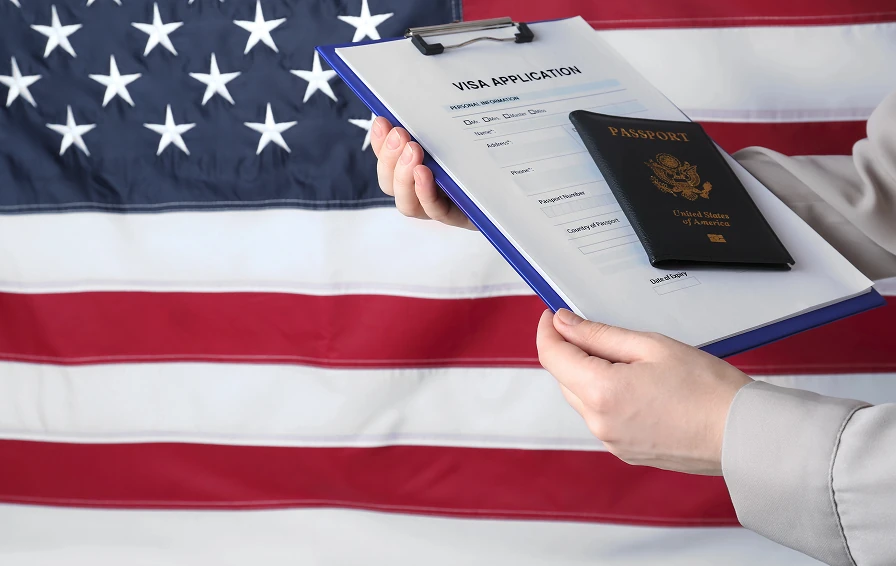
For as long as most advisers have been practicing, students and exchange visitors were admitted for “duration of status,” an open-ended stay tied to their program. A DHS final rule published July 17, 2026 ends that system. Effective September 15, 2026, F and J nonimmigrants, and their dependents, are admitted for a fixed period matching the program end date on the I-20 or DS-2019, capped at four years, with a hard date on the I-94. Students needing more time must file for an extension of stay with USCIS on Form I-539 rather than simply remaining enrolled. The rule also trims the F-1 post-completion grace period to 30 days for those who enter or reenter after the effective date, restricts certain program changes and second degrees at the same level, and applies transition rules to people already here, who generally may remain until their program end date or four years from the effective date, whichever comes first.
The practical consequences for Dallas-area students are immediate: unlawful presence math changes once an I-94 carries a fixed date, travel decisions now affect grace periods, and doctoral students and researchers with long programs need extension strategies filed on time. Our student visa work now includes exactly this planning, and any F or J visa holder in North Texas who has not mapped their dates against this rule should do it before the effective date, never after.
The metroplex’s employers in technology, telecom, healthcare, logistics, finance, and energy hire globally, and each work category answers a different hiring problem.
H-1B covers specialty occupations requiring at least a bachelor’s degree in a specific field, runs through an annual electronic registration and lottery for cap-subject cases, and grants three years extendable to six, with dual intent fully recognized. The category also carries 2026’s biggest controversy: the September 2025 proclamation imposing a $100,000 fee on new petitions for workers processing through consulates abroad. A federal court in Massachusetts vacated that fee on June 8, 2026 as an unlawful tax, then stayed its own ruling days later, so as of this writing the fee remains in effect for qualifying consular-processed petitions while the appeal proceeds. Petitions for people already inside the United States, changes of status, extensions, amendments, and most transfers, sit outside the fee entirely, which has made filing strategy and travel timing decisive: for some workers, a single international trip changes the economics of their case by six figures. This is a fast-moving fight, and we track it for clients week by week.
L-1 moves executives, managers, and specialized-knowledge employees from a foreign company into a related U.S. entity, including new offices, with dual intent recognized and no annual cap. TN status, created by the USMCA, admits Canadian and Mexican citizens in listed professions on employer-specific terms, renewable in three-year increments, and matters enormously in a state that trades with Mexico more than any other. E-2 rewards nationals of treaty countries who invest substantially in a U.S. business they will develop and direct, renewable indefinitely while the enterprise operates, and it powers a remarkable share of North Texas small businesses, restaurants, franchises, and services. O-1 serves people of demonstrated extraordinary ability, from researchers to artists to athletes, on an evidence-heavy petition. R-1 brings religious workers to qualifying organizations, an active category across Dallas’s congregations.
Choosing among these is rarely obvious from a job title. The same software engineer might fit H-1B, TN, L-1, or O-1 depending on citizenship, employer structure, and credentials, at wildly different costs and timelines, and running that comparison is where a temporary visa law firm in Dallas earns its role before any government form exists.
Congress and the agencies rewrote the price list and the process in 2025 and 2026, and applicants budgeting from older blog posts get surprised:
The visa integrity fee. Federal legislation added a $250 visa integrity fee attached to nonimmigrant visa issuance, structured as a refundable-deposit-style charge on top of the regular application fee, and it does not apply to changes of status filed inside the United States. The standard machine-readable visa application fee remains $185 for the common non-petition categories, with petition-based and treaty categories priced higher. Verify every amount on the State Department’s fee schedule the week you apply, because these figures now change more often than they did for a decade.
Interviews are back for nearly everyone. The waiver programs that once let children, seniors, and renewing applicants skip the consular interview were rolled back in late 2025, so applicants should now plan on an in-person appearance, the wait times that come with it, and preparation worthy of a live interview rather than a document drop.
Vetting runs deeper. Student and exchange applicants are now asked to make social media accounts reviewable, and consular screening across categories examines online presence more aggressively than before. Nothing on this page substitutes for the oldest advice in the field: every answer on every form, in every interview, and across every platform must be consistent and true, because the government now checks everything.
Getting the visa is half the work; keeping status is the other half, and the rules are unforgiving in specific, learnable ways.
The I-94 controls. Leave by the admit-until date or file to extend before it passes. A timely, non-frivolous extension or change filed on Form I-539, or through an employer on Form I-129, generally protects your position while USCIS decides.
Overstays compound. Time past the I-94 accrues unlawful presence: more than 180 days triggers a three-year bar and a year or more triggers a ten-year bar under INA § 212(a)(9)(B) once you depart, and under INA § 222(g) the visa in your passport is automatically void after any overstay, sending you back to the consulate in your home country for the next one.
Purpose violations follow you. Working on a visitor visa, dropping below a full course load, or staying after quitting the sponsoring job each create violations that surface years later, usually at the worst moment, in a future application. Misrepresenting your intent early in a stay invites a fraud analysis under the government’s 90-day rule of thumb, and a fraud finding under INA § 212(a)(6)(C) is permanent absent a waiver.
Our Dallas temporary visa attorneys spend as much time preventing these problems as fixing them: calendaring every client’s I-94 dates, filing extensions early, and giving written answers to the “can I just…” questions before they become case histories.
The most valuable conversation in a temporary visa consultation is often about the years after it. H-1B and L-1 recognize dual intent outright, letting a worker pursue permanent residence without endangering the visa; O-1 functions similarly in practice. TN, F-1, E-2, and the visitor categories do not, so a pending permanent case can complicate renewals and reentries, and sequencing becomes everything: which status to hold, when to change it, and when the long-term filing safely begins. Families ask us for a visa; we build them a timeline. That habit of planning the whole road, honestly and in writing, is the philosophy Dallas Immigration Attorneys runs on, and it is why temporary visa clients tend to come back years later for the permanent chapter.
Whether you are inviting a parent, enrolling in a program, hiring from abroad, or investing in a North Texas business, the cheapest mistake is the one prevented at the first consultation. Tell us the plan, in English or Spanish, and we will tell you the right category, the real costs under the 2026 rules, and exactly how we would build the case.
Call Or Text (945) 202-5299 To Speak With A Temporary Visa Lawyer In Dallas.