Overview
Lawful permanent residence, defined at INA § 101(a)(20), is a legal status: the privilege of residing permanently in the United States, working for any employer, owning property and businesses, and, in time, applying for citizenship. The green card is the government’s evidence of that status, which is why the two can diverge: a resident whose card expired is still a resident, and a person holding a card can still be found removable. Understanding that split answers half the questions people bring to a green card law firm in Dallas, from expired-card panic to airport encounters.
Permanent residence also comes with obligations that surprise people. Residents must file U.S. tax returns as residents, must keep their address current with USCIS on Form AR-11 within ten days of moving, must register for Selective Service when the law applies, and, under INA § 264(e), must carry their green card, a requirement that had been dormant in daily life and is now enforced. None of these obligations is difficult; ignoring them is what creates difficulty.
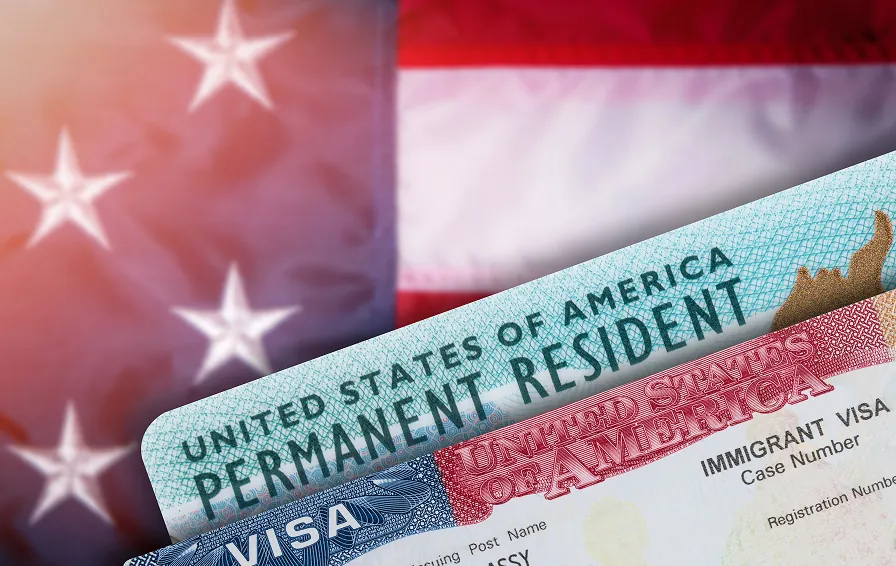
Each row below is a different legal doorway to the same status, and most families in our Dallas consultations qualify through more than one, at very different speeds and costs. The deep mechanics of family petitions and the in-country filing process live on their own pages of this site; this table exists so you can locate your case before diving into any of them.
| Path | Built For | Core Filings | Is There A Queue? |
| Family: Immediate Relatives | Spouses, parents & unmarried under-21 children of U.S. citizens | I-130, then I-485 in the U.S. or DS-260 abroad | No annual cap, no visa queue |
| Family: Preference Categories | Adult & married children, siblings of citizens; spouses & children of residents | I-130, then Visa Bulletin wait | Yes, from short to decades by category & country |
| Employment: Sponsored | Workers with a U.S. job offer | PERM labor certification, I-140, then I-485 or consular | Yes, category & country dependent |
| Employment: Self-Petition | Extraordinary-ability individuals & national interest waiver cases | I-140 without employer sponsorship | Yes, same preference system |
| Investment | EB-5 investors placing $800,000+ in qualifying projects | I-526E, conditional card, then I-829 | Yes, with country backlogs |
| Asylee & Refugee | People granted protection, one year after grant or admission | I-485 under INA § 209 | No visa queue |
| VAWA | Survivors of abuse by a citizen or resident family member | I-360 self-petition, then I-485 | Follows the family category rules |
| U & T Visas | Victims of qualifying crimes & trafficking who assisted authorities | I-485 after required status period | Yes for U grants; adjustment follows |
| Special Immigrant Juvenile | Children a state court finds abused, abandoned or neglected | State court order, I-360, then I-485 | Yes, EB-4 backlog applies |
| Diversity Lottery | Nationals of countries with low recent U.S. immigration | Annual online entry, then DS-260 | Lottery odds & hard fiscal-year deadlines |
Marriage to a U.S. citizen or resident remains the single most common green card case we see, and it is really two cases in sequence. The first proves the marriage is genuine, with the shared-life evidence, joint finances, leases, insurance, photographs across time, affidavits from people who know you, that officers at the Irving field office weigh every week, and with interview preparation that treats the couple’s own story as the primary exhibit. A marriage green card lawyer in Dallas earns the fee here by anticipating the officer’s doubts, a courtship that moved fast, finances kept separate, a prior petition in the file, and answering them before they are asked.
The second case arrives two years later for couples whose marriage was under two years old at approval: the card issues as conditional residence under INA § 216, and the joint Form I-751 to remove conditions must be filed in the 90 days before the card expires. Miss the window and status terminates automatically, with the case landing in immigration court. Waivers exist where the marriage ended in divorce, where abuse occurred, or where termination would cause extreme hardship, and receipt notices currently extend a conditional card’s validity for 48 months while USCIS decides, a wait long enough that many of our clients become eligible to naturalize before the I-751 is even adjudicated. We calendar the 90-day window on approval day, every time, because this deadline forgives nothing.
The metroplex hires the world, and employment-based green card sponsorship is how those hires become permanent. For most sponsored workers the road has three stages: PERM labor certification, where the employer tests the U.S. labor market under Department of Labor rules; the I-140 immigrant petition, proving the job and the worker’s qualifications in one of the preference categories of INA § 203(b); and the final residence stage, timed by the Visa Bulletin. Some of the strongest candidates skip the employer entirely: EB-1A serves people with extraordinary ability, and the national interest waiver under EB-2 lets applicants whose work benefits the country self-petition, categories our employment-based green card attorneys in Dallas build on evidence the way litigators build trials.
Three practical truths govern these cases in 2026. Priority dates rule: some categories are current while others, notably for applicants born in India, are severely backlogged or temporarily unavailable, so the same résumé produces wildly different timelines depending on birthplace. Portability protects: under INA § 204(j), a worker whose residence application has been pending 180 days can move to a same-or-similar job without restarting, an analysis worth documenting before accepting any offer. And sponsorship is a partnership: we work with both the company and the worker so recruitment files, job descriptions, and immigration timelines survive government scrutiny, because a failed audit costs both sides years.

Some of the most important green card work in Dallas starts with survival rather than sponsorship. People granted asylum, and refugees admitted from abroad, become eligible to apply for residence one year later under INA § 209, a filing we prepare for our protection clients as the natural next chapter. Survivors of abuse by a citizen or resident family member can self-petition under VAWA and adjust without the abuser’s knowledge. Victims of qualifying crimes and trafficking who assist law enforcement move from U and T status to residence after the required period. Children whom a Texas state court has found abused, abandoned, or neglected can pursue Special Immigrant Juvenile classification and, subject to the EB-4 backlog, a green card that lets them grow up in safety.
These cases share two traits: the eligibility rules are technical, and the applicants are usually navigating them while recovering from the events that qualified them. Our team handles them with the patience they demand, in the client’s language, with evidence gathered at the client’s pace.
However the eligibility arises, the green card itself issues through one of two procedures. Applicants inside the United States who qualify use the in-country filing process, with interviews for our region held at the USCIS field office in Irving; the full mechanics, including who qualifies, what it costs, and the traps around travel and work while a case is pending, live on that dedicated page of this site. Applicants abroad, and many people here who cannot use the in-country route because of how they entered, complete consular processing through the National Visa Center and an immigrant visa interview at the post serving their country, which for Mexican nationals means Ciudad Juárez. Choosing between the procedures is a legal decision with permanent consequences, because leaving the United States with certain history can trigger multi-year reentry bars, and it is the single decision we most often see self-filers get wrong. Bring the whole history to a green card attorney in Dallas before choosing a lane, never after.
Winning permanent residence is the beginning of protecting it, and 2026 has made that protection active rather than theoretical.
Travel can cost the status. Extended absences invite abandonment findings: trips over six months break the continuous residence that future naturalization requires, trips of a year or more put the card itself in question, and a pattern of living abroad while visiting the United States invites scrutiny regardless of trip length. Residents planning long stays abroad should obtain a reentry permit on Form I-131 before departing, and residents stranded past a year should ask about the SB-1 returning resident visa rather than gambling at the airport.
Airports are where status gets pressured. Returning residents are being questioned about their travel patterns, their ties, and their records more aggressively than in years past. Know the core rule: a CBP officer cannot take your permanent residence away. Officers can ask you to sign Form I-407, abandoning your status voluntarily, and you can decline. Declining means your case goes to an immigration judge, which is exactly where a resident with counsel wants a status dispute decided. Nothing signed under pressure in a secondary inspection room is required by law, and our office takes these calls with urgency because the first hours matter.
Carry the card. INA § 264(e) requires residents eighteen and older to carry their green card, a long-ignored provision now being enforced across the country. The advice is unglamorous and real: carry it, keep a copy at home, and replace a lost card immediately.
Old records resurface. The removability grounds of INA § 237 reach certain convictions, including some that seemed minor and some resolved decades ago, and enforcement priorities in 2026 have brought old files back to life. Any resident with any criminal history, anywhere, should have it reviewed by counsel before traveling internationally or filing anything with the government, because the review costs an hour and the alternative can cost the status.
The ten-year card expires even though the status does not, and an expired card quietly breaks the practical machinery of life: I-9 employment verification, reentry from travel, driver’s license renewals, loan closings. Renewal runs on Form I-90, filed up to 180 days before expiration, at $415 online or $465 on paper under the current fee schedule, with biometrics included and fee exemptions when the government caused the error or never delivered the card. Processing has slowed to a median of roughly nine months as of mid-2026, but the receipt notice extends an expiring card’s validity for 36 months, and that receipt paired with the old card works for employment verification and for reentry after trips under a year. Residents who need proof faster can request a temporary I-551 stamp through USCIS.
Two boundaries matter. A two-year conditional card is never renewed on I-90; it requires the conditions-removal filing described above, and confusing the two forms costs families months. And renewal applications are still applications: USCIS reviews the file, and a resident with a complicated record should have a green card renewal lawyer in Dallas look before filing, because the routine filing is occasionally the one that surfaces an old problem.
For many of our clients, permanent residence is the second-to-last chapter. Residents generally become eligible to naturalize after five years, or three years when married to and living with a U.S. citizen, and the strategy questions, when to file, what old issues to resolve first, how travel history affects the clock, begin while the green card is still new. We flag naturalization timing for every green card client at approval, because the strongest citizenship cases are planned years ahead, and because a family that came to us for one card usually has a next goal behind it.
Green card work rewards the habits this practice was built on. Every case starts with a full-history consultation in English or Spanish and an honest verdict, including the cases we advise against filing, because a weak application under 2026 enforcement conditions is a risk we will not sell you. Every strategy arrives in writing with real government fees and bulletin-based timelines. Every filing passes more than one attorney before submission. And the relationship runs the card’s whole life: sponsorship, approval, the two-year conditions deadline, the ten-year renewals, the travel questions at 2 a.m. from an airport abroad. Green card sponsorship lawyers in Dallas are easy to find; a team built to still be answering your family’s questions a decade later is the point of this one.
Whether you are starting a sponsorship, staring at a 90-day window, holding an expired card, or answering hard questions at a port of entry, the right next step is the same: a confidential evaluation where we map your facts against every open path and hand you the plan in writing.
Call Or Text (945) 202-5299 To Speak With A Green Card Attorney In Dallas.