Key takeaways:
President Trump’s original birthright citizenship order sought to deny federal citizenship recognition to some U.S. born children of undocumented parents and parents with temporary immigration status. On June 30, 2026, the Supreme Court rejected that approach and held that children born in the United States to parents who are unlawfully or temporarily present are citizens at birth. Latino families were projected to bear a disproportionate share of the original policy’s consequences. A newer August 2026 executive order raises narrower questions that remain under litigation.
For immigrant families, citizenship is deeply personal. It determines whether a child can grow up knowing that the country where they were born recognizes them as one of its own.
If you are undocumented or living in the United States on a temporary visa, the most important question is simple: Is my U.S. born child still a U.S. citizen?
For children covered by the Supreme Court’s June 30, 2026 ruling in Trump v. Barbara, the answer is yes. The Court held that children born here to parents who are unlawfully or temporarily present are subject to U.S. jurisdiction and are citizens at birth under the Fourteenth Amendment.
What Trump’s Birthright Citizenship Order Tried To Change
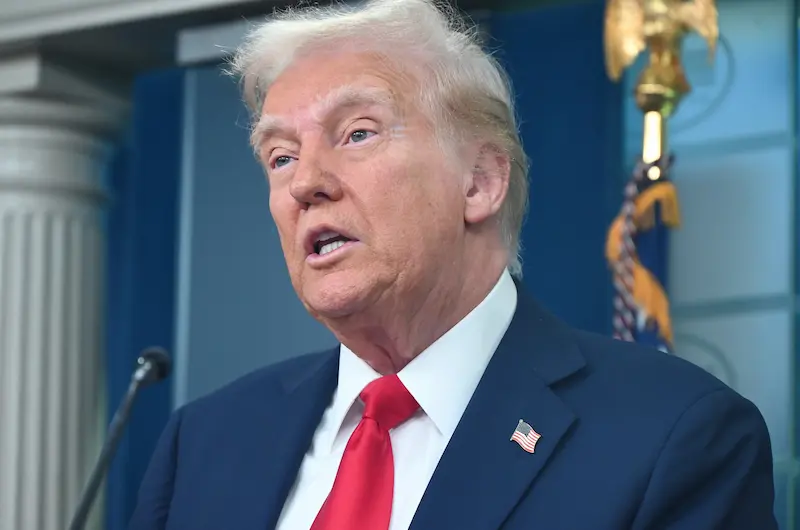
Executive Order 14160, signed January 20, 2025, attempted to change how federal agencies recognized citizenship for two broad groups of children born inside the United States.
The policy challenged an understanding of citizenship rooted in the Fourteenth Amendment and reinforced by more than a century of constitutional law.
Trump’s Birthright Citizenship Order Targeted Two Parent Groups
The order covered children whose mother was unlawfully present when the child was born and whose father was neither a U.S. citizen nor lawful permanent resident.
It also targeted children whose mother was lawfully but temporarily present, including some parents here under student, work, or visitor classifications, when the father was neither a citizen nor permanent resident.
That created serious uncertainty for families using Temporary Visas. Parents following the rules of their immigration classification could still have faced federal resistance to recognizing the citizenship of a child born on U.S. soil.
The Supreme Court Rejected Trump’s Birthright Citizenship Rule
The Fourteenth Amendment says people born or naturalized in the United States and subject to its jurisdiction are citizens.
In Trump v. Barbara, the Supreme Court held that temporary presence or unlawful presence does not remove parents and their U.S. born children from that jurisdiction. The Court therefore confirmed that the Constitution protects birthright citizenship for the children covered by the case.
The ruling reinforced an important constitutional boundary. Citizenship at birth cannot simply shift each time presidential policy changes.
Why Trump’s Birthright Citizenship Order Alarmed Latino Families
The original order would not have affected every community equally.
A Brennan Center analysis published before the Supreme Court ruling examined research estimating how the policy could have affected Latino children and families if it had taken effect.
Latino Families Faced A Disproportionate Citizenship Burden
A research projected that Latinos could account for nearly 80% of births affected in the short term.
The same analysis cited projections estimating that, by 2050, Latinos could represent more than 90% of the U.S. born population left without recognized citizenship under the modeled policy.
Those were projections, not outcomes that occurred after the Supreme Court ruling. Still, they show why the attempted change produced such deep concern in Latino communities.
A constitutional right that has shaped generations of American families should provide stability, especially for children who have no control over their parents’ immigration classifications.
Losing Birthright Citizenship Could Have Changed A Child’s Future
The projected consequences extended far beyond obtaining a document.
Without recognized citizenship, affected children could have faced questions involving deportation protection, health coverage, nutrition programs, employment, higher education, voting rights as adults, passports, and federal identification.
Some legal briefs also warned of potential statelessness when another country would not automatically recognize a child as its citizen.
Those harms are not being imposed through Executive Order 14160 today because the Supreme Court rejected its central legal theory.
What Birthright Citizenship Means For Immigrant Parents Now
The Supreme Court decision protects a child’s citizenship, but a parent’s immigration status remains a separate question.
Undocumented Parents Still Have U.S. Citizen Children
A child born in the United States to undocumented parents and covered by Trump v. Barbara is a U.S. citizen at birth.
Parents should keep certified birth records and identity documents organized. Families dealing with Citizenship & Naturalization questions may also need those records when applying for a child’s U.S. passport, Social Security record, or other proof of citizenship.
A parent’s lack of immigration status does not transfer to a U.S. born child.
Temporary Visa Parents Also Keep Birthright Citizenship Protection
The Supreme Court specifically addressed children whose parents are temporarily present in the United States.
That means a parent’s student visa, temporary work status, or another qualifying temporary classification does not prevent a U.S. born child from obtaining citizenship under the constitutional rule upheld by the Court.
For families who spent months wondering whether immigration policy could change their child’s identity, that clarification carries enormous weight.
A U.S. Citizen Child Does Not Automatically Legalize A Parent
A common misunderstanding is that giving birth to a U.S. citizen child immediately provides a parent with lawful immigration status.
It does not.
Under Family Based Immigration rules, a U.S. citizen generally must be at least 21 years old before petitioning for a parent. Even at that point, a family petition does not automatically resolve unlawful entry, previous removal orders, inadmissibility, or other immigration barriers.
Your child’s citizenship may be secure while your own immigration case still requires a separate strategy.
Trump’s New Birthright Citizenship Order Creates New Questions
The June Supreme Court ruling settled the central challenge to Executive Order 14160, but the administration returned to the citizenship issue in August.
On August 6, 2026, President Trump signed Executive Order 14418, which identifies narrower circumstances in which federal agencies are directed not to recognize citizenship.
Trump’s New Citizenship Order Targets Narrower Categories
The August order covers categories involving certain foreign government personnel, people connected to designated terrorist organizations, alleged fraudulent attempts to obtain citizenship, and certain commercial arrangements involving birth in the United States.
These categories are narrower than the January order affecting undocumented and temporary status parents generally.
Families should therefore avoid assuming that every headline about a new citizenship order changes the protection confirmed by the Supreme Court.
Trump’s New Birthright Citizenship Policy Faces A Court Challenge
The legal fight is continuing.
On August 11, plaintiffs in Barbara v. Trump asked the federal district court to clarify or modify its injunction in response to Executive Order 14418. They argue that portions of the new order extend beyond the constitutional limits recognized by the Supreme Court. The First Circuit returned the case to the district court for further proceedings on August 17.
As of August 25, 2026, that challenge remains unresolved.
Dallas Families Can Protect Birthright Citizenship Records
Families in Dallas should keep certified birth certificates, passports, parental identity records, immigration documents, and federal correspondence together and accessible.
Texas does not have a separate definition of U.S. citizenship. Citizenship at birth is governed by federal constitutional and statutory law.
If a federal agency questions your child’s citizenship, if you are unsure whether the newer executive order affects your family, or if your child is a citizen but you need clarity about your own immigration options, those are issues worth reviewing carefully.
If changing birthright citizenship policies have left you unsure about your child’s citizenship or your family’s immigration options, we can help you understand how the current rules apply to your circumstances. Schedule a confidential evaluation with Dallas Immigration Attorneys so we can review your child’s citizenship questions, the parents’ immigration status, relevant documentation, and any immigration options that may be available to your family. We serve families in Dallas, Texas, and nationwide, and we’ll help you understand the current legal landscape and the next steps for your situation.