Summary
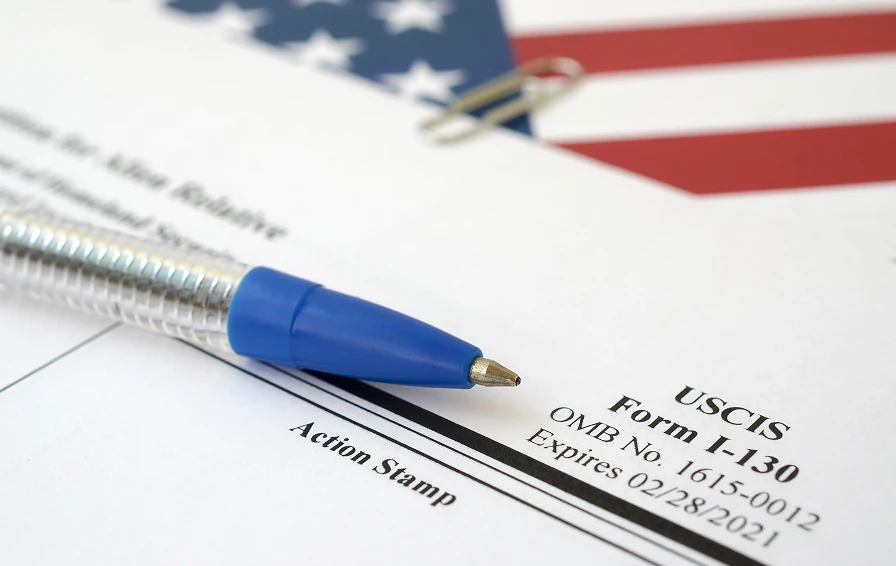
Form I-130, the Petition for Alien Relative, asks the government to recognize two facts: that the petitioner is a U.S. citizen or lawful permanent resident, and that a qualifying family relationship exists with the beneficiary. Approval establishes those facts and assigns a priority date, the beneficiary’s place in any applicable line. That is all it does. An approved I-130 confers no status, no work authorization, and no defense against removal, which is why petition strategy always includes a plan for what the beneficiary does while waiting.
The filing fee is currently $675 on paper or $625 filed online through a USCIS account, per the fee schedule on Form G-1055, and each beneficiary needs their own petition. Filed correctly, an I-130 is also durable: the priority date survives most of what life does afterward, and under INA § 204, an approved petition can later support the green card stage whether that happens inside the United States or at a consulate abroad.
U.S. citizens may petition a spouse, children of any age and any marital status, parents (once the citizen is 21), and brothers and sisters (also at 21). Lawful permanent residents may petition only a spouse and unmarried children. No category exists for grandparents, aunts and uncles, cousins, or in-laws, no matter how close the household actually is; chains of petitions, where a parent immigrates and later petitions for others, are how extended families move in practice, and mapping that chain is part of our Dallas family-based immigration services.
The citizen-versus-resident difference also creates one of the most valuable moves in this field: naturalization upgrades. When a green card holder with a pending spousal petition becomes a citizen, the case converts from the capped F2A category to immediate relative. When a resident parent naturalizes, a petition for an unmarried adult child converts from F2B to F1, which as of recent bulletins is not always faster, so the law allows the beneficiary to opt out of the conversion under INA § 204(k). These are exactly the decisions where a family petition attorney in Dallas earns the fee, because the right answer changes with each month’s bulletin.
INA § 201(b) defines immediate relatives: spouses of citizens, unmarried children under 21 of citizens, and parents of adult citizens. No annual cap applies, so a visa number is always available and the green card stage can begin as soon as the petition allows.
Everyone else falls into the family preference system of INA § 203(a), which allocates a limited number of visas each year:
Layered on top, INA § 202 caps any single country at roughly 7 percent of the annual allocation, which is why beneficiaries born in high-demand countries, above all Mexico and the Philippines, wait far longer than the worldwide line in several categories. Category and country of birth, together, decide the timeline before a single form is filed.
The State Department publishes the Visa Bulletin monthly, with two charts: Final Action Dates, showing which priority dates can receive a decision, and Dates for Filing, showing who can submit the next-stage paperwork early. USCIS announces each month which chart adjustment applicants inside the country may use, and reading the wrong chart is a classic self-filing error.
Here is the honest picture from the Visa Bulletin, laid out so a Dallas family can find their own line at a glance. The Final Action Date is the filing date the government is deciding now, so an older date means a longer line; immediate relatives have no line at all. These dates move every month, so verify the current bulletin before acting on any of them.
| Category | Who It Covers | Petitioner Must Be | Spouse & Minor Kids Included? | Worldwide Final Action Date (Aug 2026) | Mexico Final Action Date (Aug 2026) |
| Immediate Relative | Spouse, parents & unmarried children under 21 | U.S. citizen (21+ for parents) | No, each relative needs their own petition | Always current | Always current |
| F1 | Unmarried adult children (21+) | U.S. citizen | Yes | December 15, 2018 | December 1, 2007 |
| F2A | Spouses & unmarried children under 21 | Green card holder | Yes | July 22, 2026* | July 22, 2025* |
| F2B | Unmarried adult children (21+) | Green card holder | Yes | January 1, 2018 | February 15, 2009 |
| F3 | Married children of any age | U.S. citizen | Yes | May 15, 2012 | July 1, 2001 |
| F4 | Brothers & sisters | U.S. citizen, 21 or older | Yes | September 1, 2009 | April 8, 2001 |
*F2A is also listed as Current on the Dates for Filing chart for every country, the open window discussed in the next section, after jumping roughly eighteen months in a single bulletin.
The derivatives column deserves a second look, because it reverses what people expect. Preference petitions carry the beneficiary’s spouse and unmarried children under 21 automatically under INA § 203(d); immediate relative petitions carry no one, so a citizen petitioning for her mother does nothing for her mother’s husband or minor children, and each needs a separate filing. The Mexico column tells the other hard truth, and for a city whose families so often trace to Mexico, honesty matters more than marketing: sibling and married-child petitions for Mexican nationals are now being decided from filings made in 2001, a quarter-century line, against 2009 to 2018 dates for most of the rest of the world. The Philippines carries comparable backlogs in several categories.
Two conclusions follow. First, file early: the priority date is the one asset in this system that only improves with age, and a petition filed this year for a sibling protects a place in line that will matter enormously in the 2040s. Second, never build family plans on last month’s chart. We track the bulletin for every open case and tell clients, in plain language, what moved and what it means for their file.
As of the most recent bulletins, F2A, the category for spouses and unmarried under-21 children of permanent residents, is listed as Current on the filing chart for every country. In practical terms, an eligible spouse who is in the United States after a lawful entry may be able to file the petition and the green card application together right now instead of waiting in a line that, in other years, has run two years or more. Beneficiaries abroad can move into consular processing without a numerical wait.
Windows like this one close without warning; the category has retrogressed before when demand spiked, and a case filed during the open window keeps its place even if the dates later move backward. If your household includes a green card holder married to someone whose status is unresolved, this is the paragraph that should prompt the phone call. Our family petition help in Dallas starts with exactly this triage: who in the family fits an open category today, and what filing today locks in.

USCIS approves relationships it can verify and questions everything else. Marriage cases need evidence of a shared life: joint finances and leases, insurance and beneficiary designations, photographs across time and places, children’s records, and statements from people who know the couple, with any prior divorces fully documented. Parent and child cases turn on birth and marriage certificates, with certified translations, and on the definitions in INA § 101(b): a stepchild qualifies only if the marriage creating the relationship happened before the child turned 18, and an adopted child generally only if the adoption was finalized before 16 with the custody and residence requirements met. Sibling cases must document the common parent on both sides. Where documents are missing or registries are unreliable, secondary evidence, sworn statements, and in some cases DNA testing fill the gap, and we build that record deliberately rather than hoping an officer accepts less.
One more form of proof runs through every category: consistency. Names, dates, and histories must match across every filing the family has ever made, because the government compares them all. Our Dallas family petitions team rebuilds the family’s full immigration paper trail first, so the petition we file agrees with the record that already exists.
An approved petition with a current priority date opens one of two procedures, and choosing correctly is a legal decision, never a default.
Inside the United States. Beneficiaries who were inspected and admitted and who meet the other requirements may pursue the in-country process at USCIS, with the interview for Dallas-area families held at the field office in Irving. Immediate relatives can often file the petition and the residence application in the same package, which also unlocks interim work and travel documents while the case is pending. The mechanics of that path have their own dedicated page on this site.
Through a consulate abroad. Beneficiaries outside the country, and many inside it who cannot use the in-country path, complete consular processing: the approved petition moves to the National Visa Center, the family submits the DS-260 application, civil documents, and the affidavit of support, and the beneficiary attends an immigrant visa interview at the U.S. embassy or consulate designated for their country. For Mexican nationals, that interview happens at the U.S. Consulate General in Ciudad Juárez, a trip thousands of North Texas families have made, and preparing for it thoroughly is a core part of our Dallas family petition services because a refusal there strands the beneficiary outside the country.
Sequencing matters as much as selection. NVC document collection can start months before a priority date becomes current, medicals expire, and police certificates have shelf lives. We run the calendar so the family never loses a month to an avoidable expiration.
A large share of Dallas consultations involve a spouse or parent who crossed the border without inspection years ago, built a life here, and now has a citizen or resident relative ready to petition. The petition itself is usually approvable. The trap sits at the next stage: leaving for the consular interview can trigger the unlawful presence bars of INA § 212(a)(9)(B), three years for more than 180 days of unlawful presence, ten years for a year or more, exactly when the person steps out to do things the right way.
The provisional waiver process exists for this situation. Form I-601A asks the government to waive the unlawful presence ground before departure, based on proof that refusal would cause extreme hardship to a U.S. citizen or resident spouse or parent. Hardship is a demanding legal standard, documented through medical, financial, psychological, and country-condition evidence, and we build these applications like the mini-trials they are. With the waiver approved in hand, the beneficiary travels to Ciudad Juárez or the relevant consulate for a short, planned trip instead of an open-ended separation.
Some families skip the trip entirely: beneficiaries grandfathered under INA § 245(i) by a qualifying petition filed on or before April 30, 2001 may resolve everything inside the country after paying the statutory penalty. Old petitions filed by parents, spouses, or employers decades ago regularly save today’s cases, so we ask every family to bring every immigration paper the household has ever received.
Nearly every family case requires Form I-864, the affidavit of support governed by INA § 213A, in which the petitioner promises the government that the immigrant will not become a public charge. The commitment is real: it is enforceable in court, and it generally lasts until the immigrant naturalizes, earns 40 quarters of work credit, permanently departs, or dies. Divorce does not end it.
The financial threshold is income at 125 percent of the federal poverty guidelines for the sponsor’s household size, counting the immigrant. Petitioners who fall short have options: assets can substitute at the required multiples, a household member can add income on Form I-864A, or a joint sponsor who independently meets the threshold can sign their own I-864. Tax transcripts, current pay evidence, and honest math decide these packages, and an affidavit that fails at the interview stalls a case that was otherwise won. Our team runs the sponsorship numbers at the first consultation, so the family knows before filing whether a joint sponsor needs to be recruited.
Fiancé(e) cases. The K-1 visa under INA § 101(a)(15)(K) brings a fiancé(e) to the United States for a marriage that must occur within 90 days, followed by the in-country residence process. It is faster to the reunion but adds a second case after the wedding, and we help couples compare it honestly against marrying first and petitioning as a spouse.
Widows and widowers. A spouse of a U.S. citizen who dies can self-petition on Form I-360 within two years of the death under INA § 201(b)(2)(A)(i), even if no I-130 was ever filed. Grief buries deadlines, so families should ask about this rule early.
Death of the petitioner mid-case. Under INA § 204(l), certain beneficiaries who were living in the United States when the petitioner died can still complete the process with a substitute sponsor. A petition is not automatically buried with its petitioner.
Children aging toward 21. The Child Status Protection Act, at INA § 203(h), freezes or recalculates a child’s age in defined ways, sometimes preserving eligibility past a 21st birthday. The math is technical and the stakes are a childhood, so we run CSPA calculations in every case with a teenager in it.
Family cases reward the way this firm was built. Every consultation happens in English or Spanish with no translation layer between you and your legal team. Every strategy is written down, with real government fees, realistic bulletin-based timelines, and the honest answer when a category means a decade of waiting or a waiver case means months of evidence-gathering. Every petition is reviewed by more than one attorney before filing, because a stepchild date, a prior petition, or a misread chart changes outcomes years downstream. And every family gets the whole map at the start, petition through interview through conditions removal, because a Dallas family petition law firm should be planning the reunion, never just mailing the form.
The right first step costs an hour: a confidential evaluation where we identify every qualifying relationship in your household, check the current bulletin against each one, and hand you a written plan with real numbers. Some families learn they can file this month. Others learn which petition to file now so the 2030s arrive with options. Either answer is worth having.
Call Or Text (945) 202-5299 To Speak With A Family Petition Attorney In Dallas.